AI Should Move Planning From Analysis to Action
For many planners, a large part of the working day is still spent trying to understand what happened before deciding what to do about it. They review dashboards, compare forecasts, investigate…
4 min read
Updated
For many planners, a large part of the working day is still spent trying to understand what happened before deciding what to do about it. They review dashboards, compare forecasts, investigate deviations, check historical patterns, and work through lists of exceptions before they can determine which issues actually matter. This made sense when planning systems were mainly designed to store data, calculate forecasts, and present information, but AI creates an opportunity to change that model.
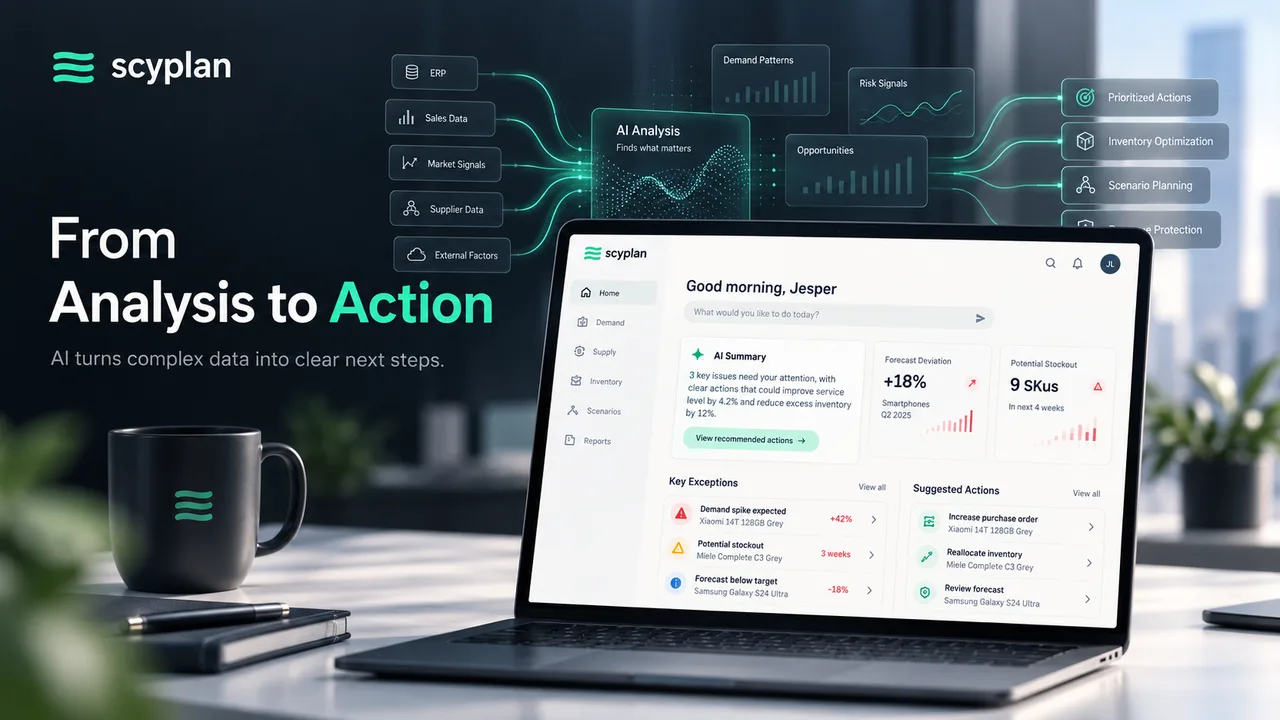
Modern planning software should do more of the analysis in the background and bring the most relevant issues to the surface. Instead of asking planners to search for problems, the system should help identify what deserves attention, explain why it matters, and provide the context needed to decide what to do next.
More dashboards are not the answer
Most planning platforms already contain more than enough information. Planners can access forecast accuracy, bias, service levels, inventory, historical sales, promotions, customer forecasts, and many other metrics across thousands of products and customers, but access to more information does not necessarily make decisions easier.
A company with 5,000 SKUs should not require a planner to manually review 5,000 forecasts every week. The real objective is to identify the relatively small number of products, customers, or locations where something meaningful has changed, which means planning software should become better at prioritizing information rather than simply displaying more of it.
Exception management needs to become more intelligent
Exception-based planning is not new, but traditional alerts can still create considerable noise. If a system generates hundreds of alerts every morning, the planner is effectively given another list to investigate, and fixed thresholds do not always distinguish between something that is statistically unusual and something that is commercially important.
A 20% forecast change on a low-volume product may have little impact, while a 5% change on a critical high-volume SKU could create a serious inventory or service risk. By considering factors such as volume, margin, inventory exposure, service levels, and historical behavior, AI can help prioritize exceptions based on business impact rather than deviation alone.
The analysis can happen before the planner starts investigating
A more intelligent system could evaluate the latest demand, forecast, inventory, and performance data before the planner begins reviewing it. Instead of opening several reports to search for potential problems, the planner could start with a short list of issues that already include the most relevant context.
The system might identify a sudden increase in demand, show which customer or region is driving it, compare the pattern with previous periods, and highlight the potential impact on inventory. The planner can then focus on determining whether the change is temporary, commercially expected, or something that requires an adjustment, while much of the repetitive investigation has already been completed.
From identifying problems to supporting decisions
The next step is moving from explanation toward action. If the system detects a potential stockout, showing a red warning symbol should only be the starting point because the planner also needs to understand what is causing the risk, when it is likely to occur, and what could change the outcome.
The system might identify an unusual customer order pattern, highlight an inventory imbalance, or show how different forecast adjustments would affect the projected position. The planner should remain in control because supply chain decisions often depend on commercial context and information that is not yet visible in the data, so the role of AI is to prepare the decision rather than replace it.
Human judgment becomes more valuable
As software becomes better at processing data and identifying patterns, planners can spend more time on the areas where human judgment creates the most value. They may know about an upcoming promotion, a customer discussion, a supply constraint, or an unusual event that a model cannot yet see, and that context can fundamentally change the right planning decision.
This is particularly valuable for mid-market companies, where planning teams are often relatively small. The objective should not be to give those teams more data to analyze, but to help them focus on fewer, more relevant decisions and spend more time on the situations where their experience actually matters.
Planning software should help answer “what next?”
Planning systems have traditionally been good at answering what happened, what the forecast is, and where performance deviated from plan. Modern systems need to become better at answering the questions that follow: what deserves attention, why does it matter, and what should the planner consider doing next?
For us at Scyplan, that is an important part of what modern planning technology should deliver. More of the analytical work should happen in the background so planners can spend more of their time applying judgment and making better decisions.
Planning, Simplified.
Other relevant articles

Why Planning Sophistication Should Be Invisible to the Planner
Why Planning Sophistication Should Be Invisible to the Planner Supply chain planning technology has become far more sophisticated. Forecasting methods have improved, machine learning is more…
4 min read
What Is an End-to-End Planner and How Do We Get There?
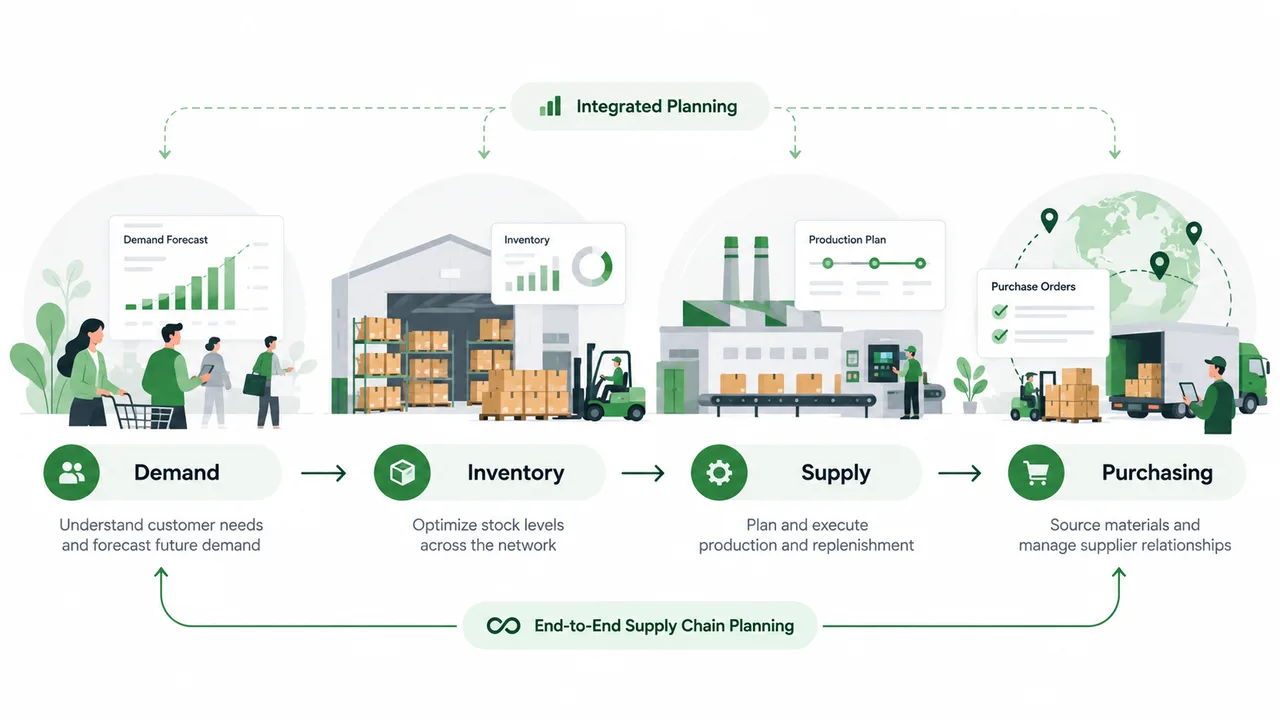
End-to-end planners connect decisions across demand, inventory, supply, production and procurement. Their rise also changes how we think about the traditional IBP cycle.
4 min read
Buy Planning Software or Vibe Code It in Excel?
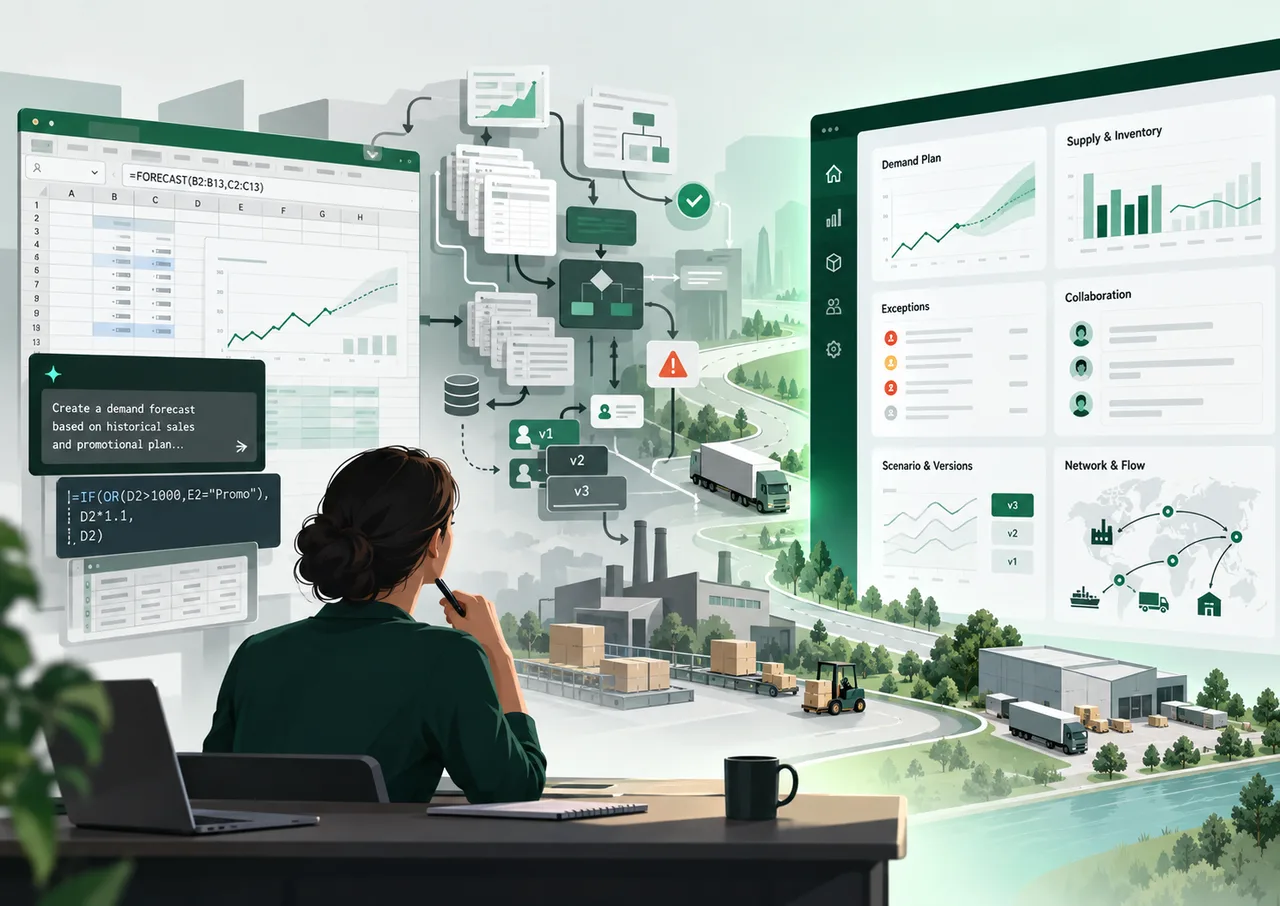
AI makes it surprisingly easy to build planning tools in Excel. The harder question is whether your planning team wants to become responsible for maintaining them.
3 min read