What Is an End-to-End Planner and How Do We Get There?
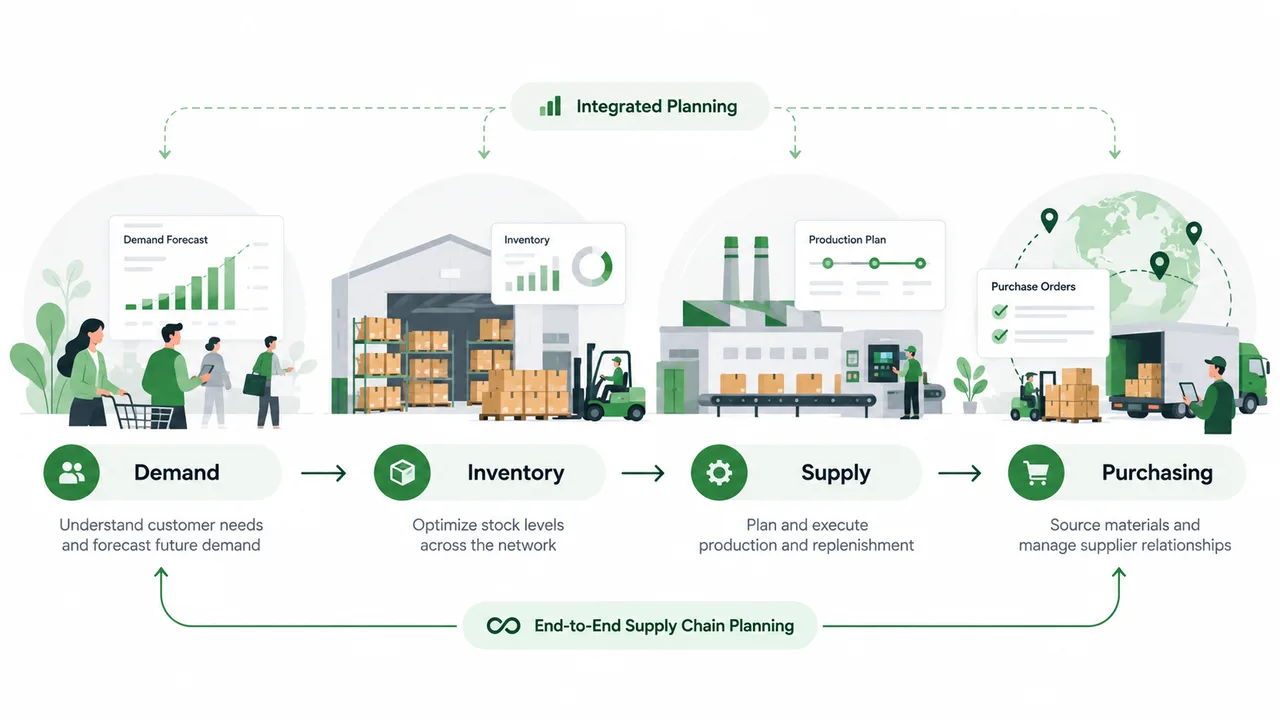
End-to-end planners connect decisions across demand, inventory, supply, production and procurement. Their rise also changes how we think about the traditional IBP cycle.
4 min read
A demand planner sees that the forecast for an important product family has increased. The change looks credible, but production is already close to capacity, inventory is unevenly distributed and one critical material has a long supplier lead time.
The forecast is only the beginning of the decision. Someone also needs to understand what that change means for inventory, capacity, procurement and customer service. In many organizations, these questions still move through several planners and meetings before the full impact becomes clear.
This is where the end-to-end planner comes in. An end-to-end planner understands how decisions connect across demand, inventory, supply, production and procurement, and can follow an issue beyond the boundaries of one functional plan.
From planning a number to planning its consequences
Planning roles have traditionally been divided for good reason. Demand planners understand customers and forecasting, supply planners understand constraints, while production and procurement planners work closer to execution. End-to-end planning does not require removing that expertise.
The change is in how decisions are managed. BCG describes end-to-end planning as increasingly decision-led, starting with the important business decisions and organizing people, processes, data and technology around them.
Consider our demand increase. Instead of stopping after changing the forecast, the planner needs to understand whether inventory can absorb it, whether capacity is available, whether materials can arrive in time and where shortages could emerge. Specialists may still become involved, but the planner maintains the line of sight across the decision.
The problem is not specialization. The problem starts when the handovers between specialists become the planning process.
What happens to the traditional IBP cycle?
This development also affects Integrated Business Planning. Traditional IBP creates alignment through a recurring sequence of demand, supply, reconciliation and management reviews. Modern planning technology makes it increasingly possible to identify exceptions, evaluate consequences and update plans without waiting for the next meeting.
Deloitte describes a move from cyclical planning toward a more continuous process, with demand and supply monitoring becoming simultaneous activities and operational reviews increasingly focused on exceptions. Importantly, it also cautions against simply removing planning forums: strategic, governance and human decisions still require structured discussion.
A simplified view of that shift looks like this:
Traditional IBPEmerging modelDemand review once per cycleDemand continuously monitoredSupply review follows demandDemand and supply evaluated togetherReconciliation meeting resolves gapsScenarios and trade-offs evaluated as issues emergeFinancial reconciliation later in the cycleFinancial implications considered alongside operational decisionsMBR resolves major open decisionsMBR focuses on major exceptions, policy and strategic trade-offsPlanner prepares a functional planPlanner manages cross-functional decisions and exceptionsCalendar triggers planning activityMaterial changes can trigger planning activity
This does not mean the monthly IBP cycle disappears. It means fewer operational decisions need to wait for it. The formal cycle can increasingly provide governance and alignment while more planning happens continuously underneath it.
That shift also makes the end-to-end planner more relevant. If demand and supply are evaluated together, someone needs enough understanding of both to interpret the trade-off and determine when another specialist or decision-maker needs to become involved.
How do we get there?
Creating an end-to-end planner starts with the process, not the job title. Plans may currently sit in different systems, assumptions may not flow between functions, or decision ownership may simply be unclear. Kearney describes connected planning around a unified decision model that links commercial, supply chain and financial decisions while making trade-offs explicit.
Technology then needs to make broader responsibility manageable. Systems can perform calculations, monitor changes and bring exceptions to the planner's attention, while planners concentrate on interpreting what has changed and deciding what to do. This is closely connected to the shift we discussed in AI Should Move Planning From Analysis to Action.
Scyplan is being developed in this direction, progressively connecting Demand Planning with Inventory, Production and Procurement Planning. The goal is to give planners enough connected information and decision support to manage issues further across the supply chain before another handover is required.
A practical transition can start at a relatively high level:
Start with decisions. Identify recurring decisions that currently move across several planning functions, such as responding to a projected shortage or a significant change in demand.
Connect the planning information. Make the relevant demand, inventory, capacity and supply implications visible together so the planner can understand the consequences of a change.
Broaden planner responsibility gradually. Give planners ownership of a wider part of the decision while keeping specialists involved where deeper expertise is required.
Adapt the planning cadence. Allow material exceptions to trigger analysis and decisions when they occur, while using the formal IBP cycle for broader alignment, governance and strategic trade-offs.
The destination is not one planner doing everything. It is a planning organization where important decisions can travel further with fewer handovers, without losing the specialist knowledge needed to execute them well.
Other relevant articles
Excel vs Supply Chain Planning Software
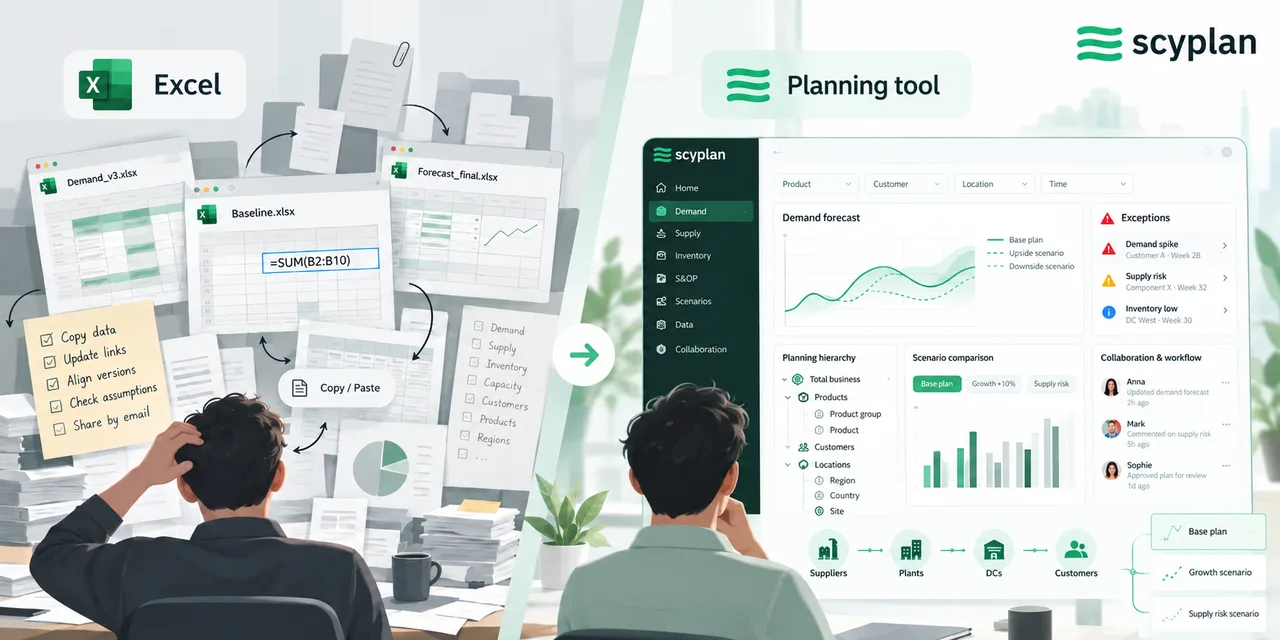
Excel can support sophisticated supply chain planning. The real difference appears in everything around the forecast: data, workflow, collaboration, scenarios and control.
5 min read

The Worst Forecast Is Not Always Your Biggest Problem
The SKU with the worst forecast accuracy may not be your biggest planning problem. Better prioritization connects forecast exceptions with their business impact.
5 min read
Buy Planning Software or Vibe Code It in Excel?
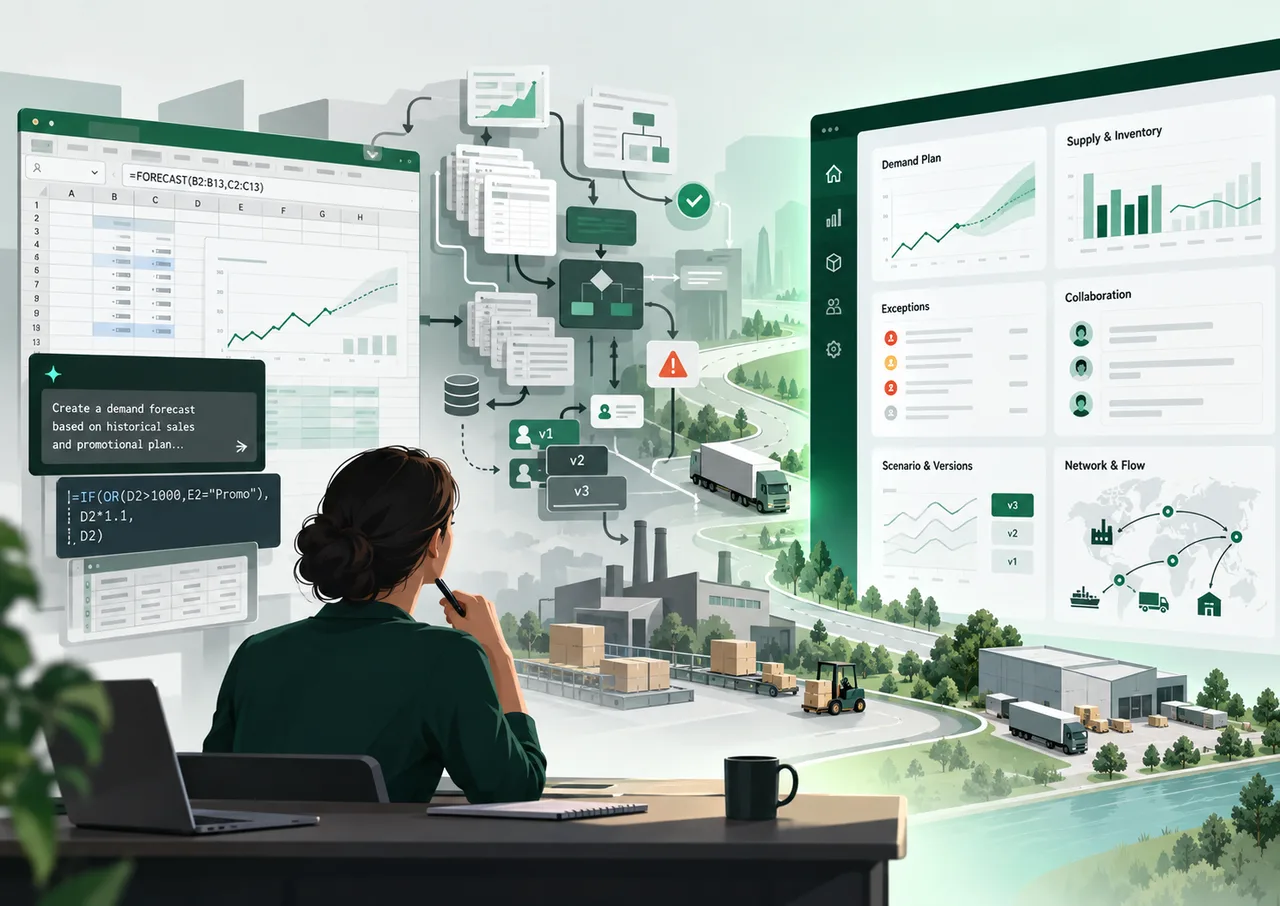
AI makes it surprisingly easy to build planning tools in Excel. The harder question is whether your planning team wants to become responsible for maintaining them.
3 min read