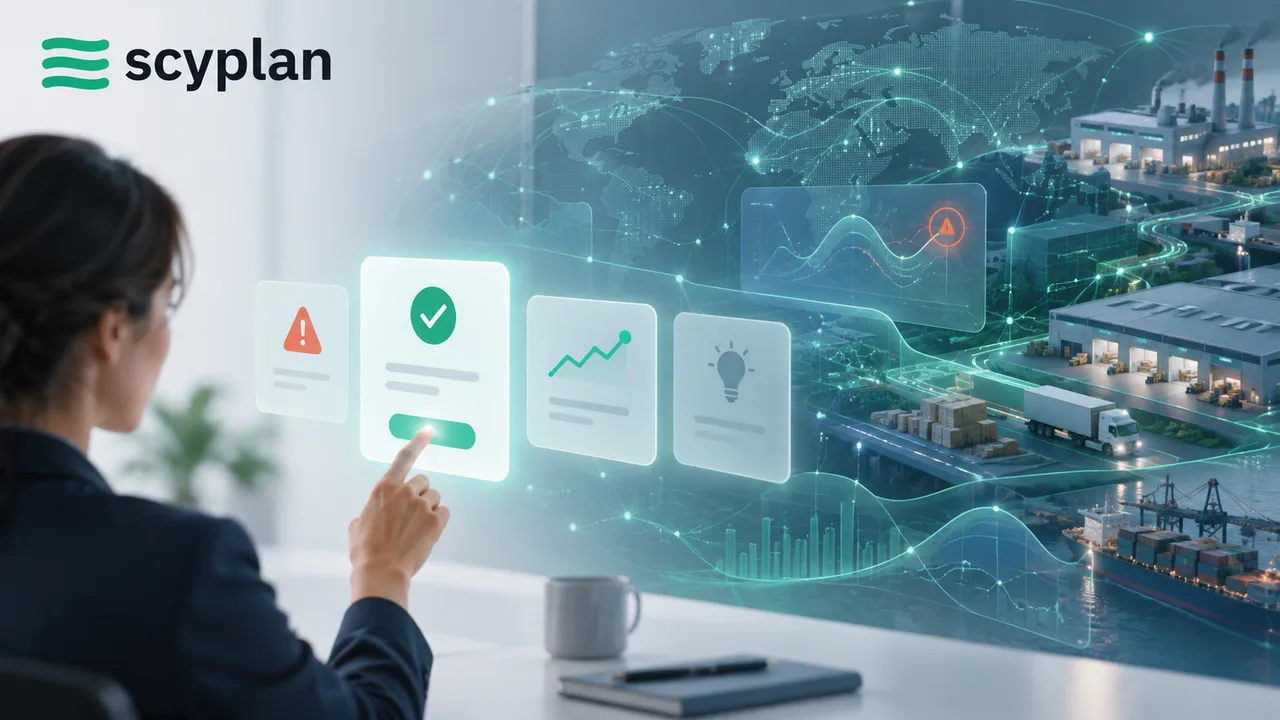
Why Planning Sophistication Should Be Invisible to the Planner
Why Planning Sophistication Should Be Invisible to the Planner Supply chain planning technology has become far more sophisticated. Forecasting methods have improved, machine learning is more…
4 min read
Why Planning Sophistication Should Be Invisible to the Planner
Supply chain planning technology has become far more sophisticated. Forecasting methods have improved, machine learning is more accessible, and AI is beginning to change how people interact with business software. Yet in many organizations, planners still spend too much time navigating screens, selecting parameters, interpreting reports, and learning how a particular system expects them to work.
That creates an odd contradiction: the technology becomes more intelligent, while much of its complexity is still passed on to the user. I believe modern planning software should move in the opposite direction. As the technology becomes more sophisticated, the experience for the planner should become simpler.
Complexity is not the same as capability
Enterprise software is often designed to support a broad range of industries, planning processes, hierarchies, and business rules. That flexibility can be valuable, but it also tends to create systems with extensive configuration options, multiple layers of navigation, and complex workflows.
The problem is not that the software is capable of doing a lot. The problem is when the planner needs to understand too much of that complexity to get value from it.
A forecasting engine may evaluate different statistical models, account for seasonality, detect anomalies, recognize changing demand patterns, and continuously compare forecast performance. These are valuable capabilities, but the planner should not have to manage every underlying parameter to benefit from them. The software should absorb as much of that complexity as possible and surface the result in a way that supports the decision that needs to be made.
Planners should understand planning, not software mechanics
Demand planning is already a complex role. Planners need to understand customers, products, promotions, market changes, historical patterns, and commercial input, while coordinating with sales, finance, operations, and supply. The software should make that work easier rather than introducing another layer of expertise that needs to be mastered.
In many organizations, experienced users become highly skilled at navigating the system itself. They know which reports to open, which sequence of steps is required, where certain information is hidden, and which workaround is needed when the standard process does not quite fit. Over time, this becomes accepted as normal, even though it often creates long training periods and dependency on a relatively small group of experienced users.
A planner who understands the business and the planning process should be able to become productive relatively quickly. The software should reflect how planners think about their work rather than requiring planners to understand how the software is structured.
Sophistication belongs behind the interface
Making planning software easier to use does not mean making the underlying technology less advanced. In fact, the opposite should be possible.
The backend can contain sophisticated forecasting algorithms, machine learning, optimization, anomaly detection, and large-scale data processing while the user experience remains simple. What matters to the planner is not necessarily which model produced a forecast, but whether the system can help answer practical questions such as which products require attention, why forecast accuracy has deteriorated, where bias is increasing, or what changed materially enough to require action.
There can be significant technical sophistication behind those answers, but the planner should not have to reconstruct that analysis manually. Good software should make advanced capabilities accessible without forcing the user to interact with all of the complexity behind them.
AI can make advanced planning more accessible
This is where AI becomes particularly interesting. Traditional planning systems often require users to understand where information is located before they can find an answer. A planner needs to know which report to open, which filters to apply, which level of the hierarchy to select, and which metrics to compare.
AI can make that interaction much more direct. A planner should increasingly be able to ask why forecast accuracy declined last month, which products contributed most to the change, whether a particular customer is creating unusual demand, or what the inventory impact would be if a forecast were adjusted.
The question itself may be simple, while answering it requires the system to work across multiple datasets, time periods, hierarchies, and planning metrics. That is where AI can add real value: not simply by adding another feature, but by making sophisticated capabilities easier to access.
The same principle applies to exception management. Instead of asking planners to continuously search through reports and dashboards to determine where attention is needed, the system can analyze the planning environment in the background and surface the issues that matter most. This allows planners to spend less time finding problems and more time understanding context, challenging assumptions, and deciding what to do next.
Simplicity still requires transparency
A simpler user experience should not mean creating a black box. Planners still need to understand why an exception has been highlighted, what information contributed to a forecast, and what assumptions sit behind a recommendation.
This is especially important because supply chain decisions cannot be made from historical data alone. A system may identify an unusual pattern, while the planner knows that a promotion is about to start, a major customer has changed its strategy, or a market event has occurred that is not yet reflected in the data.
The technology brings analytical scale and consistency, while the planner brings context and judgment. Good planning software should make it easier to combine the two.
For us at Scyplan, that is an important design principle. Forecasting, machine learning, and AI can continue to become more sophisticated in the background, while the everyday experience for the planner becomes simpler and more intuitive.
The goal is not to reduce what planning software can do. It is to make advanced planning easier to use.
Planning, Simplified.
Other relevant articles
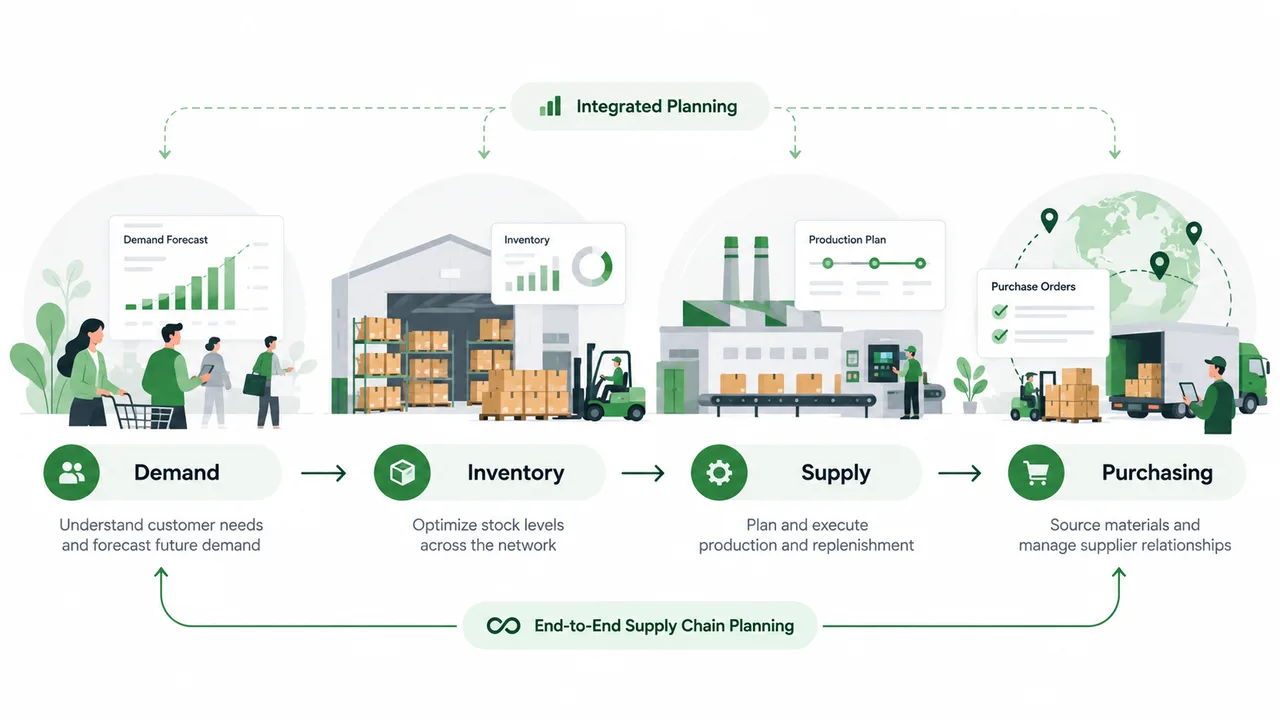
What Is an End-to-End Planner and How Do We Get There?
End-to-end planners connect decisions across demand, inventory, supply, production and procurement. Their rise also changes how we think about the traditional IBP cycle.
4 min read
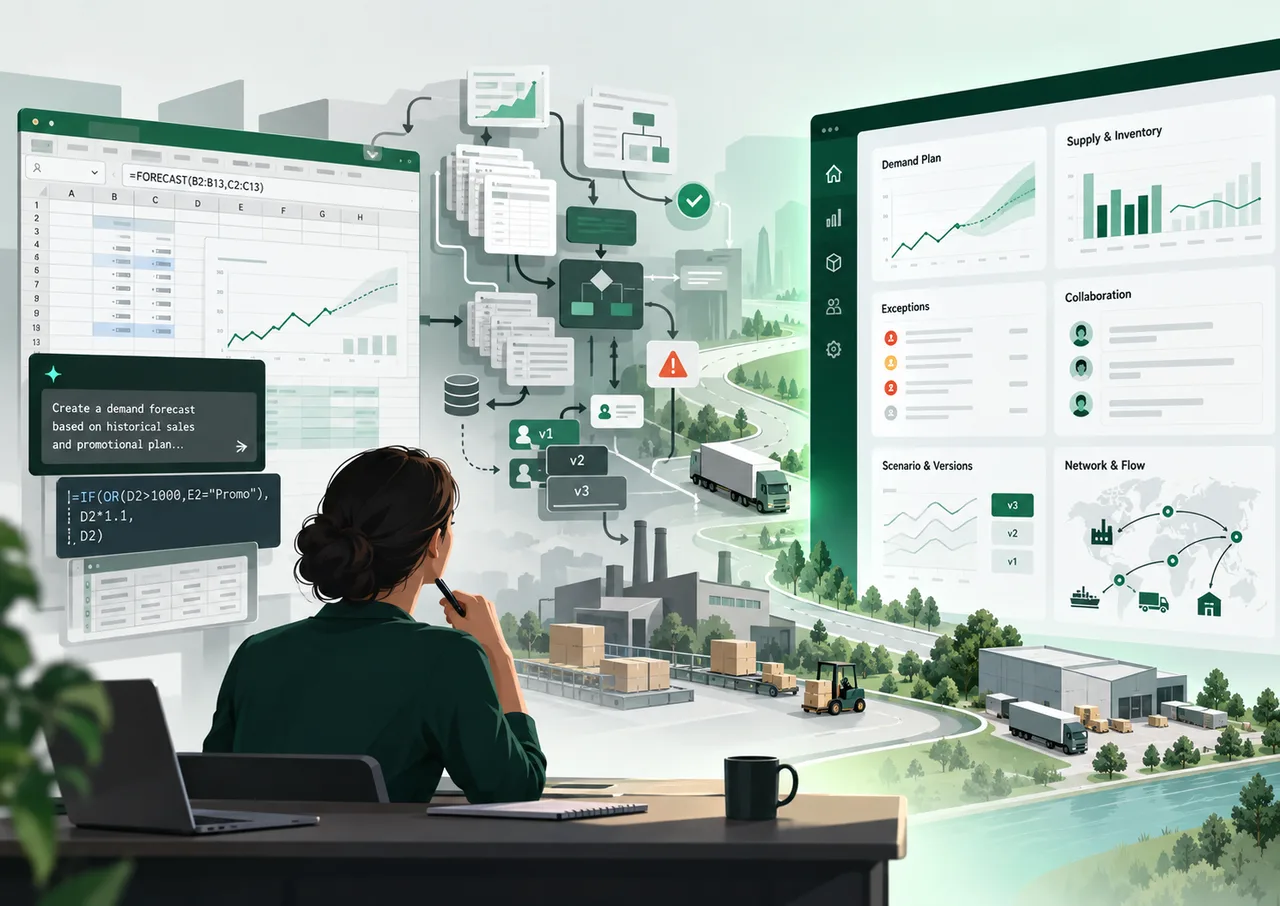
Buy Planning Software or Vibe Code It in Excel?
AI makes it surprisingly easy to build planning tools in Excel. The harder question is whether your planning team wants to become responsible for maintaining them.
3 min read
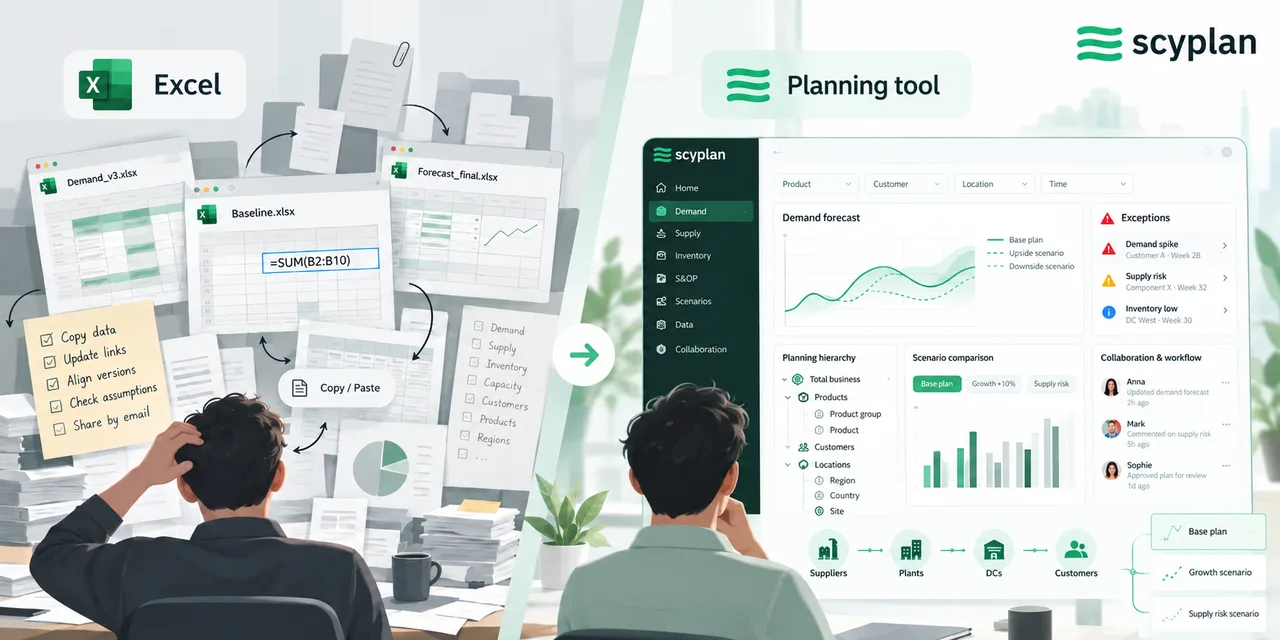
Excel vs Supply Chain Planning Software
Excel can support sophisticated supply chain planning. The real difference appears in everything around the forecast: data, workflow, collaboration, scenarios and control.
5 min read