How Sales Forecasting Can Improve Parcel Box Fill Rates
Discover how sales forecasting can improve parcel box fill rates, consolidate retail replenishment shipments, and reduce transportation costs.
3 min read
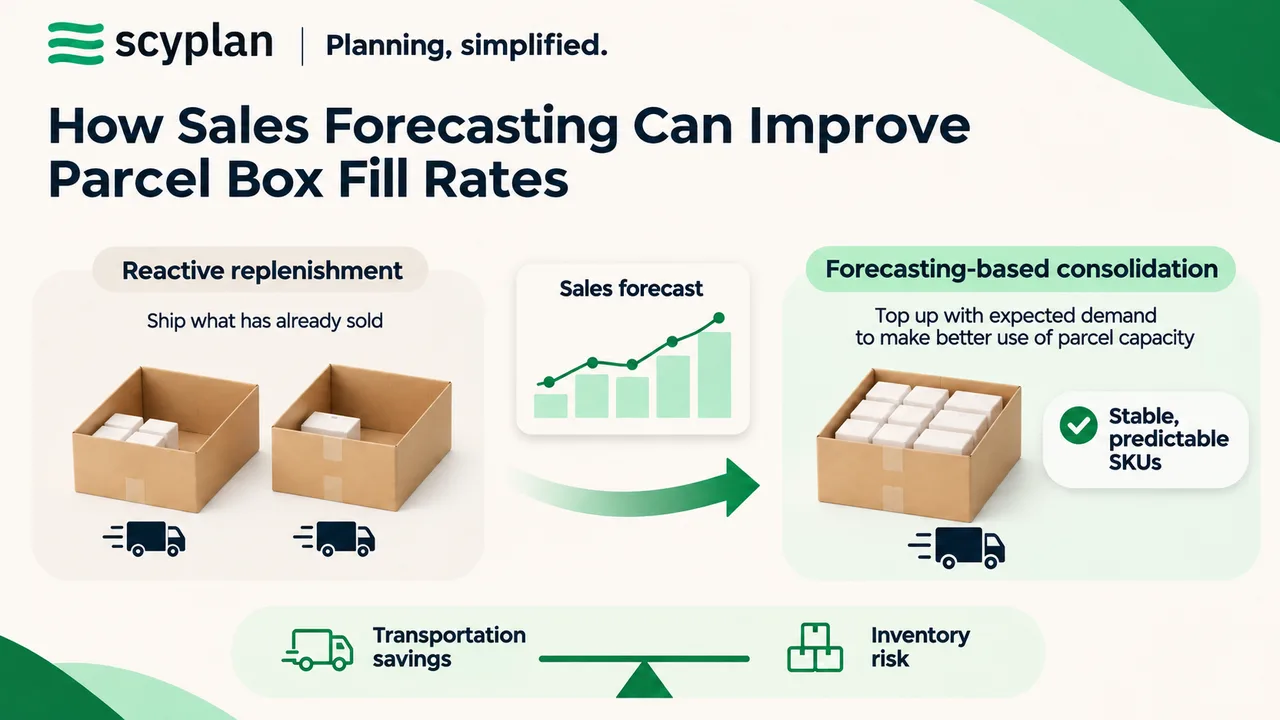
A distribution center ships 12 items to a store in a parcel that could comfortably accommodate 20. A few days later, another parcel leaves for the same store with just six items. Both shipments were triggered by legitimate replenishment requirements, yet the operation has paid to transport two parcels where one might have been sufficient.
This is a common challenge in retail distribution networks where replenishment is driven primarily by actual sales. By incorporating future demand into replenishment decisions, companies can increase parcel box fill rates and potentially reduce transportation costs without compromising product availability.
Using sales forecasts to consolidate shipments
Traditional replenishment processes often focus on replacing what has already been sold. When a product sells, the system identifies the reduction in inventory and calculates the required replenishment quantity. However, future demand is not always considered when determining how much should be included in the next shipment.
Sales forecasting creates an opportunity to change this approach. Instead of replenishing only the units already sold, the system can evaluate expected demand over the coming days and identify products that could be shipped earlier to make better use of available parcel capacity.
Consider a simplified example with a standard parcel that accommodates 20 liters of merchandise. A store requires a shipment occupying 12 liters today, while another 7 liters of demand is expected next week. If inventory levels and store storage capacity allow, shipping both quantities together could increase the parcel fill rate from 60% to 95% and potentially eliminate a subsequent shipment.
The financial benefit becomes particularly interesting across large retail networks where hundreds or thousands of relatively small parcels are shipped every day. Even modest improvements in shipment consolidation could translate into meaningful transportation and handling savings.
Why predictable demand is essential
This approach is particularly suitable for stable, fast-moving SKUs with consistent and predictable demand. When future sales can be estimated with reasonable confidence, bringing forward a few days of replenishment is less likely to result in unnecessary inventory accumulating at the store.
For slow-moving, seasonal, or highly volatile products, the economics can be very different. Forecast errors may result in excess stock, additional storage requirements, increased working capital, or eventual markdowns and write-offs. These additional costs can quickly offset the transportation savings achieved through better parcel utilization.
The objective should therefore be to identify products for which the expected transportation savings exceed the incremental cost and risk of holding inventory earlier. Forecast accuracy, demand variability, product shelf life, and store storage capacity should all influence which SKUs qualify for this type of replenishment optimization.
Connecting demand planning with transportation efficiency
The opportunity lies in connecting decisions that are often made separately. Demand planning estimates future sales, replenishment planning determines what stores need, and warehouse operations decide how products are packed and shipped. Bringing these perspectives together allows transportation efficiency to become part of the replenishment decision.
This also requires looking beyond traditional warehouse productivity measures such as pieces picked. A shipment containing 20 small products may occupy less space than one containing five large items. Product dimensions, parcel capacity, and the number of shipments avoided provide a clearer picture of the transportation opportunity.
For retailers with frequent deliveries and relatively small shipment quantities, a useful starting point is to analyze parcels with low fill rates and compare their contents with subsequent shipments to the same stores. By focusing on predictable, high-volume SKUs, companies can identify where forecast-driven consolidation offers genuine savings without introducing unnecessary inventory risk.
Planning, Simplified.
Other relevant articles
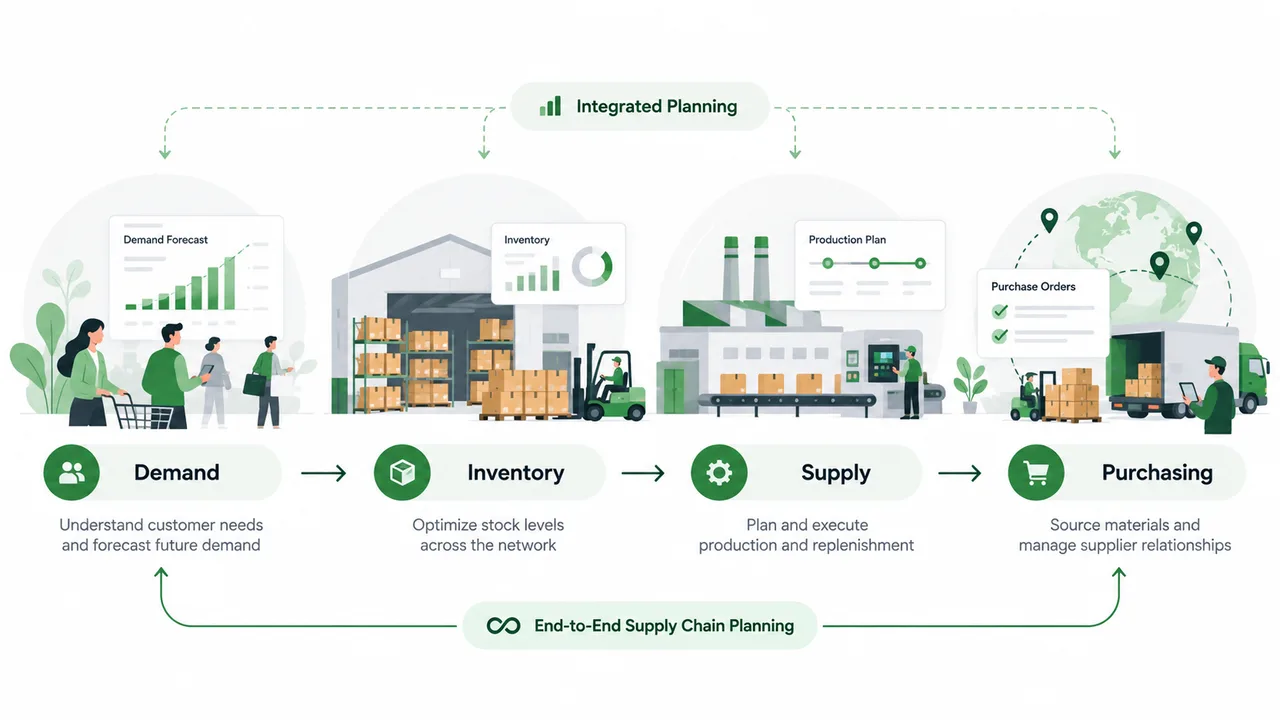
What Is an End-to-End Planner and How Do We Get There?
End-to-end planners connect decisions across demand, inventory, supply, production and procurement. Their rise also changes how we think about the traditional IBP cycle.
4 min read
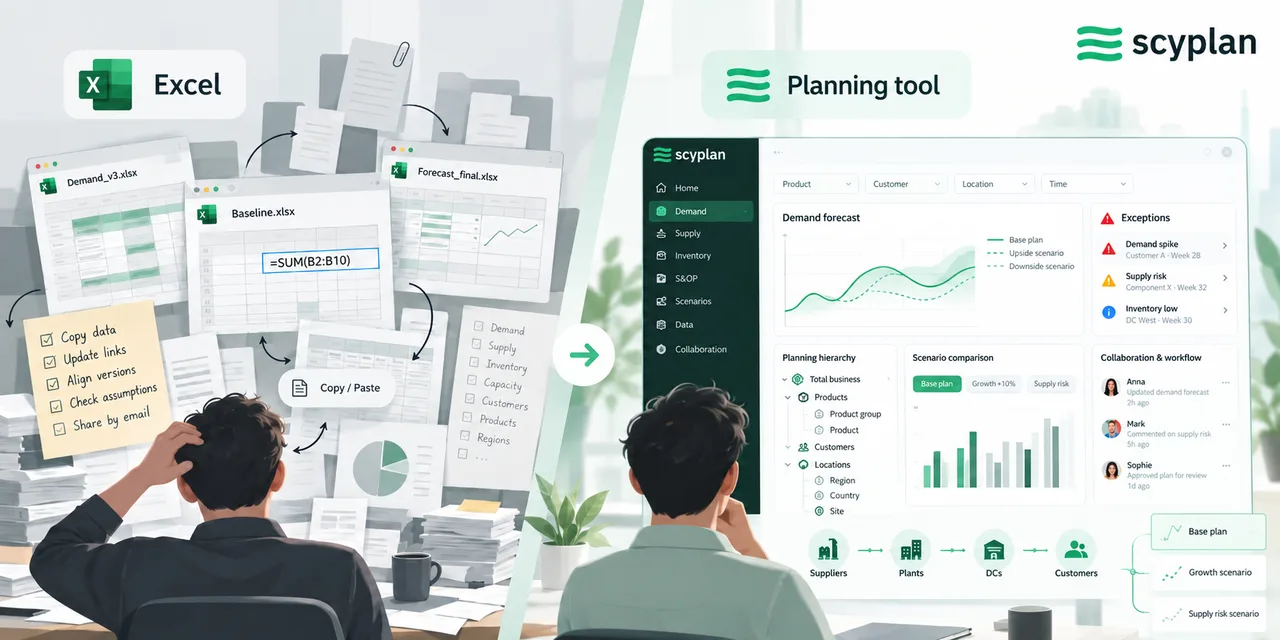
Excel vs Supply Chain Planning Software
Excel can support sophisticated supply chain planning. The real difference appears in everything around the forecast: data, workflow, collaboration, scenarios and control.
5 min read

The Worst Forecast Is Not Always Your Biggest Problem
The SKU with the worst forecast accuracy may not be your biggest planning problem. Better prioritization connects forecast exceptions with their business impact.
5 min read